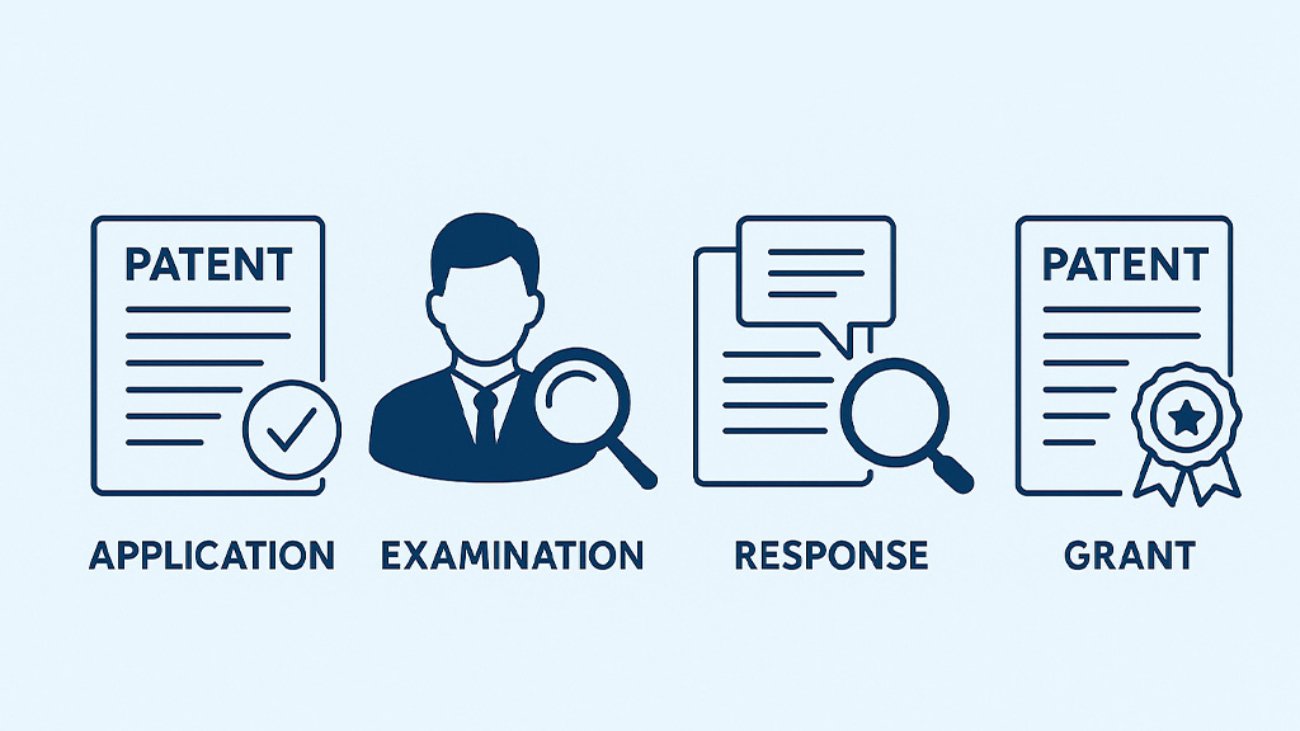
Obtaining patent protection in Canada involves more than filing an application. After a patent application is submitted, it must go through an examination process conducted by the Canadian Intellectual Property Office (CIPO) to determine whether it meets the requirements for patentability.
Understanding the patent examination process in Canada helps inventors and businesses prepare for each stage, respond effectively to examiner feedback, and make informed decisions throughout the patent application journey.
What Is Patent Examination in Canada?
Patent examination is the process where a patent examiner at the Canadian Intellectual Property Office (CIPO) reviews a patent application to determine whether it satisfies the requirements of the Canadian Patent Act and Patent Rules.
During examination, the examiner evaluates factors such as:
Whether the invention is new (novelty)
Whether it involves an inventive step
Whether it has practical utility
Whether the claims clearly define the scope of protection
Whether the application meets formal requirements
The examination process may involve communication between the applicant and the examiner until the application is either allowed, refused, or abandoned. Applicants often benefit from professional guidance throughout the patent application process to address technical and legal requirements effectively.
Step-by-Step Patent Examination Process in Canada
1. Filing a Patent Application
The process begins when an applicant files a patent application with CIPO.
A complete patent application generally includes:
Before filing, many inventors begin with a professional patent search to evaluate existing technology and better understand the competitive landscape.
Description of the invention
Patent claims defining the protection sought
Drawings (where applicable)
Abstract
Required filing documents and fees
A properly prepared application can help reduce delays and improve the efficiency of the examination process.
2. Requesting Examination
In Canada, a patent application is not automatically examined immediately after filing.
The applicant must submit a request for examination and pay the required examination fee within the applicable deadline.
Once examination is requested, the application is placed in the examination queue.
Understanding the requirements for Canadian applications is an important part of developing an effective filing strategy. Learn more about our Canadian patent services.
3. Examination by a CIPO Patent Examiner
A patent examiner reviews the application and evaluates whether the invention meets Canadian patentability requirements.
The examiner may:
Review the claims
Search relevant prior art
Analyze whether the invention is new and inventive
Identify issues that need clarification or amendment
A carefully prepared application can help improve communication with the examiner and protect the intended scope of the invention. UIPatent provides patent services in Toronto for inventors, startups, and businesses.
The examiner’s review is focused on determining whether the application should proceed toward allowance.
4. Office Actions and Applicant Responses
If the examiner identifies concerns, CIPO may issue an examination report (commonly referred to as an office action).
The applicant may need to:
Provide arguments explaining why the claims are patentable
Amend claims or other parts of the application
Address formal or technical objections
A clear and strategic response can help move the application forward.
Responding to examination reports requires careful review of claim scope, technical arguments, and patent strategy. Our patent lawyer services help clients navigate complex intellectual property matters.
5. Allowance or Further Examination
If the examiner determines that the application meets the requirements for patentability, CIPO issues a notice of allowance.
Before a patent is granted, the applicant must complete the remaining requirements, including payment of applicable fees.
If issues remain unresolved, additional examination reports may be issued.
6. Patent Grant and Maintenance
After all requirements are satisfied, the patent is granted by CIPO.
Once granted, the patent owner must pay maintenance fees to keep the patent rights in force.
Maintaining a patent requires ongoing attention to deadlines and payment obligations throughout the patent term.
How Long Does Patent Examination Take in Canada?
The timeline for patent examination in Canada varies depending on factors such as:
The complexity of the invention
The technology area
Examiner workload
Number of examination reports issued
The applicant’s response strategy
Some applications may proceed more quickly, while others may require several rounds of communication before reaching allowance.
What Happens During a CIPO Patent Examination?
During examination, the patent examiner reviews the application and may:
Search existing patents and technical literature
Evaluate the invention against patentability requirements
Review claim scope
Identify objections or required amendments
Communicate examination results to the applicant
Applicants have opportunities to respond and work with the examiner to address outstanding issues.
Common Reasons for Patent Examination Delays
Patent examination may take longer due to:
Broad or unclear claim language
Complex technical subject matter
Multiple examination reports
Delayed applicant responses
Need for claim amendments
Preparing a clear patent application from the beginning can help reduce unnecessary delays.
How Can a Patent Lawyer Help During Examination?
A patent professional can assist throughout the examination process by:
Reviewing examiner communications
Preparing responses to examination reports
Developing claim amendment strategies
Communicating technical and legal arguments effectively
Helping protect the intended scope of the invention
Professional guidance can help applicants navigate complex examination issues and make informed decisions. Learn how UIPatent supports inventors through patent protection services.
Frequently Asked Questions About Patent Examination in Canada
What is the patent examination process in Canada?
The patent examination process in Canada is the review procedure conducted by the Canadian Intellectual Property Office (CIPO) to determine whether a patent application meets the requirements for patent protection. During examination, a patent examiner reviews the claims, searches relevant prior art, and evaluates whether the invention satisfies Canadian patentability requirements, including novelty, utility, and inventive step.
How long does patent examination take in Canada?
The time required for patent examination in Canada varies depending on factors such as the complexity of the invention, the technology area, examiner workload, and the number of examination reports issued. Some applications may proceed faster, while others may require multiple rounds of communication with CIPO before reaching allowance.
When does a patent application get examined in Canada?
A Canadian patent application is not automatically examined immediately after filing. The applicant must submit a request for examination and pay the required examination fee within the applicable timeframe. After the request is made, the application enters the examination queue at CIPO.
What happens if CIPO issues an examination report?
If a patent examiner identifies issues with an application, CIPO may issue an examination report outlining objections or required changes. The applicant can respond by providing arguments, amending claims, or addressing the examiner’s concerns. A well-prepared response can help move the application toward allowance.
Can a patent application be rejected during examination in Canada?
Yes. A patent application may face objections during examination if the examiner determines that certain requirements have not been met. However, applicants generally have opportunities to respond to examination reports, amend claims, and address outstanding issues before a final decision is made.
Do I need a patent lawyer during the Canadian patent examination process?
While applicants may handle certain patent matters themselves, professional support can be valuable during examination, especially when responding to examiner objections, preparing claim amendments, and developing strategies to protect the scope of an invention. A patent professional can help navigate the technical and legal aspects of the process.
Conclusion
The patent examination process in Canada is a critical stage in obtaining patent protection. Understanding how CIPO reviews applications, responds to examiner concerns, and evaluates patentability requirements helps inventors and businesses better prepare for the journey from filing to patent grant.
UIPatent assists inventors, startups, and businesses with patent preparation, examination responses, and patent strategy throughout the Canadian patent process.
Contact UIPatent today to discuss your patent filing strategy.
The cost of filing a patent in Canada depends on the complexity of the invention, professional preparation and drafting, CIPO government fees, examination requirements, and the overall filing strategy. Patent costs are typically spread across several stages rather than paid as a single fee.
For 2026, Canadian patent applicants should consider both professional fees and official Canadian Intellectual Property Office (CIPO) fees when planning their patent budget.
Understanding the Cost of Filing a Patent in Canada
Obtaining patent protection involves several different expenses throughout the patent process. The total cost depends on factors such as the complexity of the invention, the scope of protection sought, the amount of technical information involved, and whether additional examination steps are required.
The main costs associated with filing a patent in Canada generally include:
Preparing and drafting the patent application
Government filing and examination fees
Responding to examination reports
Maintaining patent rights after grant
Understanding these costs early can help inventors and businesses make informed decisions about their patent strategy. Many businesses begin by evaluating their protection options through a professional patent consultation before deciding on a filing approach.
Typical Patent Cost Categories in Canada
Patent Stage
Typical Cost Type
When It May Apply
Patent Search
Professional Fee
Before filing
Patent Drafting
Professional Fee
Before filing
Application Filing
CIPO Fee + Professional Fee
At filing
Patent Examination
CIPO Fee + Professional Fee
During prosecution
Office Action Responses
Professional Fee
If examination issues arise
Final Fee
CIPO Fee
Before patent grant
Maintenance Fees
Annual CIPO Fees
During application and after grant
International Filing
Foreign Government + Professional Fees
If protection outside Canada is pursued
Patent costs are usually incurred at different stages rather than as a
single payment. The actual amount depends on the invention, filing
strategy, examination requirements, and jurisdictions involved.
What Are the Main Costs of Filing a Patent?
1. Patent Drafting and Application Preparation Costs
Preparing a patent application is often one of the most significant costs in the patent process. A well-drafted application can help clearly define the invention, establish appropriate claim scope, and reduce potential issues during examination. Before preparing an application, many inventors also conduct a patent search to evaluate existing technologies and potential challenges.
The cost of preparing a Canadian patent application varies depending on:
The complexity of the invention
The technology field
The amount of technical information provided
The number and scope of claims required
For many inventions, professional patent preparation and drafting costs may range from approximately CAD $5,000 to $15,000 or more, depending on the complexity and requirements of the application.
Professional fees vary significantly among applications because patent drafting is customized to the invention, technical field, claim strategy, and available disclosure materials.
Investing in a properly prepared application at the beginning can help avoid unnecessary amendments, delays, and additional costs later during examination.
Applicants are required to pay government filing fees as part of the application process. Additional fees may apply depending on factors such as:
The type of applicant
Application requirements
Examination requests
Additional documents or services
Government fees are separate from professional fees charged for preparing and managing the patent application.
2026 CIPO Patent Fees
CIPO Fee – 2026
Small Entity
Standard
Application Fee
CAD $241.24
CAD $595.06
Request for Examination
CAD $482.48
CAD $1,190.13
Each Claim Over 20
CAD $58.97
CAD $117.94
Final Fee
CAD $181.20
CAD $446.03
Maintenance – Years 2–4
CAD $60.26 / year
CAD $134.02 / year
CIPO adjusts certain patent fees annually. The amounts above are official
2026 government fees and are separate from professional patent drafting,
prosecution, and advisory fees.
Note: Fees are subject to change and eligibility
requirements. Always confirm current fees with CIPO before filing.
3. Patent Examination and Prosecution Costs
After filing, a patent application enters the examination stage. During examination, a CIPO examiner reviews the application and may issue examination reports requesting clarification, amendments, or further information.
Professional costs during this stage may include:
Reviewing examiner communications
Preparing responses
Amending claims
Providing technical and legal arguments
The total cost of examination support depends on the complexity of the objections and the number of examination reports issued.
Some applications may require only limited responses, while others may involve multiple rounds of communication before reaching allowance. Learn more about the patent examination process in Canada and how applications move through CIPO review.
4. Patent Maintenance Fees
Canadian patent applications and granted patents require annual maintenance fees. These payments begin on the second anniversary of the Canadian filing date and continue while the application or patent remains in force.
Failure to pay required maintenance fees may result in the patent application or granted patent losing its active status.
Factors That Affect Patent Costs in Canada
Complexity of the Invention
A simple mechanical invention may require less preparation compared with a complex technology involving software, electronics, biotechnology, or multiple technical components.
More complex inventions usually require additional analysis, technical explanation, and claim drafting.
Technology Field
Different technical fields may require different levels of research and drafting.
For example, inventions involving advanced technologies may require more detailed descriptions and carefully structured claims to define the scope of protection.
Number of Claims and Scope of Protection
Patent costs can also be affected by the number and complexity of claims included in the application.
A broader protection strategy may require additional drafting and review to properly define the invention while meeting patent requirements.
Can Small Entities Pay Lower Canadian Patent Fees?
Yes. CIPO provides reduced fees for eligible small entities. Eligible applicants can include entities with fewer than 100 employees and universities, provided the applicable small entity requirements are satisfied and the required declaration is submitted.
Small entity status can substantially reduce certain filing, examination, claim, final, and maintenance fees.
How Much Does a Patent Lawyer or Patent Agent Cost in Canada?
The cost of working with a patent lawyer or patent agent in Canada varies depending on the services required, the complexity of the invention, and the stage of the patent process. Professional fees are separate from CIPO government fees.
Professional services may include:
Patentability assessment
Patent search
Application drafting
Filing support
Examination responses
Amendments and examiner interviews
Patent portfolio strategy
International filing coordination
Depending on the matter, professional fees may apply at different stages of the patent process. Applicants should confirm what services are included in a fee estimate before proceeding.
Working with an experienced patent professional can help applicants develop an appropriate filing strategy and navigate the technical and legal requirements of the Canadian patent system. UIPatent provides patent lawyer and patent agent services in Toronto for inventors, startups, and businesses seeking professional guidance.
Can International Patent Protection Increase Costs?
A Canadian patent provides protection only in Canada. Businesses and inventors seeking patent protection in other countries may need to file additional applications, which can significantly increase the overall cost of building an international patent portfolio.
International patent costs may include:
Foreign patent preparation and filing fees
Translation costs
Local patent professional fees
Government filing and examination fees
Patent prosecution costs
Ongoing maintenance or renewal fees in each jurisdiction
The total cost of international patent protection depends on the number of countries involved, the complexity of the invention, and the filing strategy selected.
For businesses planning to enter international markets, developing a patent strategy early can help prioritize important jurisdictions, manage costs, and determine where patent protection is most commercially valuable.
Inventors and businesses can better manage patent expenses by:
Conducting a patent search before filing
Preparing technical information carefully
Identifying important markets early
Developing a clear filing strategy
Working with patent professionals to avoid unnecessary delays
Determining whether small entity status may apply
Avoiding unnecessary filings in markets with limited commercial value
A strategic approach can help allocate resources effectively while protecting valuable innovations.
Frequently Asked Questions About Patent Costs in Canada
How much does it cost to file a patent in Canada?
The cost of filing a patent in Canada varies depending on factors such as the complexity of the invention, the scope of protection required, professional preparation fees, government fees, and examination requirements. A patent application may involve costs at different stages, including drafting, filing, examination, and maintenance.
What are the main costs involved in obtaining a patent in Canada?
The main costs of obtaining a patent in Canada typically include patent application preparation, government filing fees, examination-related costs, responses to examiner reports, and maintenance fees after filing or grant. The total cost depends on the specific invention and the complexity of the patent process.
How much does it cost to prepare a patent application in Canada?
Patent preparation costs in Canada depend on the complexity of the invention, the technology area, and the scope of protection required. Professional drafting fees may vary significantly because each patent application requires a customized description and claim strategy.
Are there government fees for filing a patent in Canada?
Yes. Patent applicants must pay government fees when filing and during certain stages of the patent process with the Canadian Intellectual Property Office (CIPO). Additional fees may apply for examination requests, maintenance, and other required services.
Does the cost of a patent increase if CIPO issues an examination report?
Yes. If CIPO issues an examination report, additional costs may be required to review the examiner’s comments, prepare responses, amend claims, and address outstanding issues. The cost depends on the complexity of the examination process and the number of responses required.
Is filing a patent in Canada cheaper than filing internationally?
A Canadian patent only provides protection in Canada. Obtaining patent protection in other countries usually requires additional filings, professional fees, and government costs. Businesses planning international protection should consider their target markets and develop a filing strategy early.
Are CIPO fees the same for every applicant?
No. CIPO provides different fee levels for eligible small entities and standard entities. Small entity status is subject to eligibility requirements and a valid declaration.
When do Canadian patent maintenance fees begin?
Canadian patent maintenance fees generally begin on the second anniversary of the filing date and continue annually while the application or patent remains in force.
Conclusion
Understanding the Cost of Filing a Patent in Canada helps inventors and businesses plan their intellectual property strategy and make informed decisions about protecting valuable innovations.
While obtaining patent protection requires investment, a well-planned patent strategy can help inventors and businesses protect valuable innovations and create long-term intellectual property assets.
UIPatent helps inventors, startups, and businesses with patent searches, application preparation, examination support, and patent strategy across Canada and international markets.
ElevateIP Canada is designed to help Canadian startups better understand, develop, and use intellectual property as part of their business strategy. For many startups, developing an IP strategy and securing patents, trademarks, or other IP rights can require specialized expertise and significant resources.
The program is a Government of Canada initiative designed to provide Canadian startups with access to IP education, strategy development, and support for implementing IP strategies. It is delivered through selected business accelerators and incubators (BAIs) across Canada.
For eligible startups, this support may help reduce some of the barriers associated with developing an IP portfolio and making informed decisions about protecting innovations in Canada and internationally.
In this guide, we explain how ElevateIP works, what types of IP support may be available, and how startups can prepare to use the program effectively.
What Is ElevateIP Canada?
ElevateIP is a Government of Canada program designed to help Canadian startups understand, develop, and use intellectual property as part of their business strategy.
Launched in 2022 as part of Canada’s broader Intellectual Property Strategy, ElevateIP delivers support through selected business accelerators and incubators (BAIs) across the country. These organizations connect eligible startups with IP education, professional advice, and resources for developing and implementing an IP strategy.
The program focuses on three main areas:
IP education and awareness: Helping startups understand patents, trademarks, copyrights, trade secrets, and other forms of intellectual property.
IP strategy development: Helping businesses identify their IP assets and develop a strategy aligned with their commercial objectives.
IP strategy implementation: Supporting eligible startups as they take steps to protect and manage their intellectual property.
The Government of Canada originally committed $90 million over four years beginning in 2022–2023 to establish ElevateIP. In Budget 2025, the government proposed an additional $84.4 million over four years starting in 2026–2027 to renew the program, reflecting its continued role in supporting Canadian startups.
What Support Does ElevateIP Canada Provide?
ElevateIP is designed to help startups move beyond simply learning about intellectual property and begin incorporating IP into their broader business strategy. The specific support available can vary depending on the organization delivering the program and the startup’s eligibility, needs, and stage of development.
IP Education and Awareness
Startups can access educational resources and activities designed to improve their understanding of intellectual property. This may include workshops, seminars, training programs, and other learning opportunities covering topics such as patents, trademarks, copyrights, trade secrets, and IP strategy.
Developing an IP Strategy
For some startups, the next step is determining what intellectual property they have, what should be protected, and how that protection supports their commercial objectives. ElevateIP can provide access to expertise that helps eligible businesses develop an IP strategy tailored to their circumstances.
Implementing an IP Strategy
Eligible startups may also receive support for putting their IP strategy into action. Depending on the applicable program stream and delivery organization, this can include access to professional IP services related to protecting and managing intellectual property.
Because eligibility requirements, available services, funding levels, and application procedures can differ among ElevateIP delivery organizations, startups should confirm the current terms of the program available in their region before incurring IP-related expenses.
Who Can Access ElevateIP Support?
ElevateIP is primarily designed to support Canadian startups through participating business accelerators and incubators (BAIs). However, accessing support is not necessarily as simple as applying directly to the federal government.
ElevateIP is delivered through selected organizations across Canada, and each delivery organization may have its own application process, eligibility requirements, available services, funding limits, and intake periods.
Depending on the program available in your region, factors such as your company’s location, stage of development, participation in an accelerator or incubator, IP needs, and proposed activities may affect eligibility.
Before beginning an IP project with the expectation of receiving ElevateIP support, startups should confirm:
whether they meet the current eligibility requirements;
which ElevateIP delivery organization serves their region;
what types of IP activities are eligible for support;
whether pre-approval is required before engaging an IP professional; and
what portion of the eligible costs, if any, must be paid by the startup.
Program requirements can change, so businesses should review the current terms provided by the relevant ElevateIP delivery organization before proceeding.
How to Apply for ElevateIP Canada Funding and Support
Startups generally access ElevateIP support through one of the organizations selected to deliver the program rather than by submitting an application directly to the Government of Canada.
The exact process varies by delivery organization, but it generally involves identifying the appropriate ElevateIP provider, reviewing its eligibility requirements, and applying for the relevant level of IP support.
1. Find the ElevateIP Provider for Your Region
Start by identifying the organization delivering ElevateIP services to startups in your province or region. The Government of Canada maintains information about the organizations participating in the program.
2. Review Current Eligibility Requirements
Eligibility criteria can vary between delivery organizations and may change between funding periods. Review the current requirements carefully before applying.
3. Identify Your IP Needs
Consider what your business is trying to protect and what assistance you need. Depending on your circumstances, this could involve developing an IP strategy, evaluating an invention, pursuing patent protection, protecting a brand through trademarks, or addressing other intellectual property issues.
4. Apply Through the Appropriate Delivery Organization
Follow the application or intake process established by the relevant ElevateIP provider. You may be asked to provide information about your company, technology, business activities, existing IP, and proposed IP project.
5. Confirm Approval Before Starting Eligible Work
If you intend to use ElevateIP support toward professional IP services, confirm the applicable requirements before starting the work or incurring costs. Approval procedures, eligible expenses, funding limits, and startup contributions may vary by program and delivery organization.
What IP Costs Can ElevateIP Help With?
Depending on the ElevateIP delivery organization, funding stream, and current program requirements, eligible startups may be able to receive support for certain professional services associated with developing and implementing an IP strategy.
These activities may include:
Patent-Related Services
For startups developing new technologies, products, processes, or other inventions, eligible activities may include professional services related to assessing and pursuing patent protection. This can include patent searches, patentability assessments, patent strategy, and the preparation and filing of patent applications.
Trademark Protection
Startups developing a brand may also need to consider trademark protection for names, logos, or other brand identifiers. Depending on the applicable ElevateIP program, certain professional trademark services may qualify as part of implementing an IP strategy.
IP Strategy
Before filing an IP application, a startup may benefit from identifying its existing and potential IP assets and determining which forms of protection align with its commercial objectives. An IP strategy can consider patents, trademarks, copyrights, trade secrets, ownership, licensing, and other IP-related considerations.
Other Professional IP Services
Depending on the startup’s circumstances and the rules of the applicable ElevateIP provider, other professional services related to the development, protection, or management of intellectual property may also be eligible.
Not every IP expense is automatically covered by ElevateIP. Eligible activities, funding limits, cost-sharing requirements, and approval procedures depend on the organization delivering the program. Startups should obtain confirmation from their ElevateIP provider before assuming that a particular service or expense will be funded.
How UIPatent Can Help with Your IP Strategy
ElevateIP can help eligible startups access resources for developing and implementing an intellectual property strategy. When professional IP services are required, UIPatent can assist startups with evaluating, protecting, and managing their intellectual property.
Depending on your business and technology, our services may include:
Patentability assessments and patent searches to evaluate an invention and identify relevant prior art before filing.
Trademark services for protecting names, logos, and other brand identifiers.
IP strategy support to help identify potentially valuable IP assets and determine appropriate forms of protection.
Technical support for inventions across a range of engineering and scientific fields.
If you are participating in an ElevateIP program, you should first confirm with your ElevateIP delivery organization whether the proposed professional services are eligible, whether prior approval is required, and what funding or cost-sharing conditions apply.
UIPatent can then work with you to define the appropriate scope of IP work based on your objectives and the requirements applicable to your project.
Frequently Asked Questions About ElevateIP Canada
Is ElevateIP Still Available in Canada?
Yes. ElevateIP was originally launched with $90 million in federal funding over four years beginning in 2022–2023. The Government of Canada subsequently announced additional funding to renew the program beginning in 2026–2027. Availability to individual startups, however, depends on the participating delivery organizations, their current intake periods, and applicable eligibility requirements.
Who Is Eligible for ElevateIP?
ElevateIP is designed primarily to support Canadian startups through participating business accelerators and incubators. Specific eligibility criteria are established by the organizations delivering the program and can vary by region, funding stream, and intake period.
Does ElevateIP Pay for Patent Applications?
ElevateIP may support eligible IP strategy implementation activities, which can include certain professional services associated with obtaining intellectual property protection. However, patent application costs are not automatically covered for every startup. The eligible expenses, funding limits, startup contribution, and approval requirements depend on the applicable ElevateIP program.
Can ElevateIP Help with Trademark Registration?
Trademark-related services may form part of an eligible startup’s broader IP strategy or implementation activities, depending on the rules of the relevant ElevateIP delivery organization. Startups should confirm eligibility before beginning trademark work or incurring expenses.
How Do I Apply for ElevateIP?
Startups generally access ElevateIP through participating organizations delivering the program across Canada. The appropriate organization should be identified first, followed by a review of its current eligibility criteria, application process, available funding, and intake status.
Do I Need an IP Professional Before Applying?
Not necessarily. The appropriate stage for engaging a patent agent, trademark agent, lawyer, or other IP professional depends on the startup’s needs and the requirements of its ElevateIP provider. If professional services are expected to receive program support, confirm whether approval is required before engaging the service provider or incurring costs.
Using ElevateIP to Build a Stronger IP Strategy
For Canadian startups, intellectual property decisions can affect product development, investment, commercialization, licensing, and expansion into new markets. ElevateIP provides eligible businesses with an opportunity to better understand their IP and, where applicable, obtain support for developing and implementing an IP strategy.
Before proceeding, confirm the current eligibility requirements, available funding, and approval process with the ElevateIP delivery organization serving your region. If your project involves patents, trademarks, patentability assessments, or other professional IP services, it is also important to determine what work should be completed and when.
UIPatent assists Canadian startups and businesses with patent and trademark matters, from evaluating potential IP rights to preparing and filing applications in Canada, the United States, and internationally.
Need help determining the appropriate IP protection for your startup? Contact UIPatent to discuss your invention, technology, brand, and IP objectives.
Securing Your Startup’s Future: How Intellectual Property Drives Success
In today’s fast-paced business world, startups are the engines of innovation, disrupting industries and bringing fresh ideas to market. But how can a fledgling company protect its innovations and carve out a lasting niche in this competitive landscape? The answer lies in a robust intellectual property (IP) strategy. Let’s explore how IP can be the cornerstone of your startup’s success, providing a competitive edge and paving the way for sustainable growth.
Introduction: The IP Advantage for Startups
Intellectual property is more than just legal jargon – it’s the lifeblood of innovation in the startup ecosystem. From patents protecting groundbreaking technologies to trademarks safeguarding brand identity, IP assets are crucial tools that can make or break a startup’s journey to success. In this post, we’ll delve into four key aspects of IP that every startup founder should understand:
Building a Competitive Moat
Attracting Investors and Boosting Valuation
Generating Revenue Streams
Fostering Innovation and Collaboration
By the end of this article, you’ll have a clear understanding of how to leverage IP to propel your startup to new heights. Let’s dive in!
Building a Competitive Moat
In the startup world, your ideas are your most valuable currency. But without proper protection, they’re vulnerable to copycats and competitors. This is where intellectual property comes in, serving as a fortress around your innovations.
Patents: Your Innovation Shield
Patents are perhaps the most powerful form of IP protection for startups. They grant you exclusive rights to your invention for a set period, typically 20 years from the filing date. This exclusivity can be a game-changer, allowing you to corner a market segment or license your technology to others.
For example, consider the case of Snapchat. In 2014, the company was granted a patent for its ephemeral messaging system, a key feature that set it apart from other social media platforms. This patent helped Snapchat maintain its unique position in the market, even as larger competitors like Facebook attempted to replicate the feature.
Trademarks: Safeguarding Your Brand Identity
While patents protect your innovations, trademarks safeguard your brand identity. Your company name, logo, and slogans are all valuable assets that distinguish you from competitors. By registering trademarks, you prevent others from using similar marks that could confuse customers or dilute your brand.
Take Airbnb, for instance. The company has aggressively protected its trademarks, including its distinctive logo known as the “Bélo.” This protection ensures that when customers see the Airbnb brand, they associate it with the company’s unique service and values, not with imitators.
**Pro Tip**: Start thinking about IP protection early. File provisional patent applications for your key innovations and register trademarks for your brand elements as soon as possible. Early protection can be crucial in securing your competitive advantage.
Attracting Investors and Boosting Valuation
In the world of startups, securing funding is often a make-or-break factor. Intellectual property can play a pivotal role in attracting investors and boosting your company’s valuation.
IP as a Magnet for Venture Capital
Venture capitalists (VCs) are always on the lookout for startups with a sustainable competitive advantage. A strong IP portfolio signals to investors that your company has unique, protected assets that can drive long-term success.
According to a study by the United States Patent and Trademark Office (USPTO), startups with patents are 35 times more likely to be successful in securing VC funding. This statistic underscores the importance of IP in the eyes of investors.
Driving Up Your Valuation
Beyond attracting investment, IP can significantly boost your startup’s valuation. Patents, in particular, can be powerful drivers of company worth. A 2019 study published in the Journal of Corporate Finance found that each patent granted to a startup is associated with a $577,000 increase in its value.
Consider the case of Moderna, the biotech startup that rose to prominence during the COVID-19 pandemic. The company’s extensive patent portfolio covering mRNA technology was a key factor in its astronomical valuation, which reached over $100 billion even before it had a product on the market.
**Pro Tip**: When pitching to investors, highlight your IP strategy. Showcase not just your current patents and trademarks, but also your pipeline of pending applications and future IP plans. This demonstrates a forward-thinking approach that investors appreciate.
Generating Revenue Streams
Intellectual property isn’t just about protection – it can also be a powerful tool for generating revenue. For startups, this can provide crucrowth.
Licensing: Turning IP into Cash Flow
One of the most direct ways to monetize IP is through licensing agreements. By allowing others to use your patented technology or trademarked brand in exchange for fees or royalties, you can create a steady stream of income.
Qualcomm, which started as a small wireless technology startup, built its empire largely on patent licensing. Today, the company earns billions annually from licensing its cellular technology patents to smartphone manufacturers worldwide.
IP-Backed Financing
In recent years, IP-backed financing has emerged as an innovative funding option for startups. This involves using your IP assets as collateral for loans or other forms of financing.
For instance, in 2020, the startup ASML secured a €750 million loan from the European Investment Bank, using its patent portfolio as collateral. This demonstrates how valuable IP can be, even before it generates direct revenue.
**Pro Tip**: Regularly audit your IP portfolio to identify licensing or financing opportunities. Consider partnering with IP valuation experts to understand the full potential of your intellectual assets.
Fostering Innovation and Collaboration
While IP is often associated with exclusivity, it can also be a powerful tool for fostering innovation and collaboration. For startups, this can open doors to partnerships and accelerate technological progress.
Open Innovation through Strategic IP Management
By strategically sharing certain IP rights while protecting core technologies, startups can engage in open innovation practices. This approach can attract partners, speed up development, and expand market opportunities.
Tesla’s 2014 decision to open up its electric vehicle patents is a prime example. While controversial at the time, this move helped accelerate the adoption of electric vehicle technology, ultimately benefiting Tesla by expanding the market for its core products.
Cross-Licensing and Patent Pools
For startups operating in complex technological fields, cross-licensing agreements and patent pools can provide access to essential technologies while protecting your own innovations.
The Open Invention Network (OIN), a patent non-aggression community in the Linux and open source space, demonstrates how collaborative IP strategies can foster innovation. Many startups in the software industry have benefited from joining OIN, gaining access to a vast pool of patents while contributing their own.
**Pro Tip**: When developing your IP strategy, consider not just how to protect your innovations, but also how to use them strategically to foster collaboration and accelerate your startup’s growth.
Conclusion: IP as a Cornerstone of Startup Success
As we’ve explored, intellectual property plays a multifaceted role in driving startup success. From building a competitive moat and attracting investors to generating revenue and fostering innovation, a well-crafted IP strategy can be the difference between a startup that fizzles out and one that becomes an industry leader.
Your Next Steps
Ready to supercharge your startup’s growth with a robust IP strategy? Don’t leave your valuable innovations unprotected. At UIPatent, we specialize in helping startups navigate the complex world of intellectual property.
Contact us today, for a free consultation. Our team of experienced patent attorneys and IP strategists can help you develop a tailored IP plan that aligns with your business goals and sets you up for long-term success.
Remember, in the startup world, speed is often of the essence. The sooner you start protecting your intellectual property, the stronger your competitive position will be. Don’t wait – secure your startup’s future today!
In today’s competitive business landscape, protecting your brand is more crucial than ever. One of the most effective ways to safeguard your company’s identity is through trademark registration. This is particularly important in Canada, where a robust intellectual property system offers significant benefits to businesses of all sizes. Let’s explore why you need a trademark registration in Canada and how it can benefit your business.
What is a Trademark?
Before diving into the importance of registration, let’s clarify what a trademark is. A trademark can be a word, phrase, symbol, design, or a combination of these elements that distinguishes your goods or services from those of others. It’s essentially your brand’s signature in the marketplace.
The Benefits of Trademark Registration
Legal Protection: Once registered, your trademark is protected under Canadian law. This gives you the exclusive right to use the mark across Canada in connection with the goods or services for which it’s registered.
Deterrent to Infringers: A registered trademark serves as a public notice of your ownership. This can deter potential infringers and make it easier to take legal action if necessary.
Asset Value: A registered trademark is a valuable intangible asset. It can be licensed, sold, or used as collateral, potentially increasing your business’s overall value.
Brand Recognition: Registration helps in building and maintaining brand recognition. It allows you to use the ® symbol, which can enhance your brand’s credibility in the eyes of consumers.
International Protection: A Canadian registration can serve as a basis for obtaining trademark protection in other countries, which is crucial if you plan to expand internationally.
The Registration Process
While it’s possible to register a trademark on your own, many businesses choose to work with intellectual property law firms in Toronto or a Canada patent attorney. These professionals can guide you through the complex registration process, which involves:
Conducting a thorough search to ensure your mark is available
Preparing and filing the application
Responding to any objections from the Canadian Intellectual Property Office
Maintaining the registration once it’s granted
The Risks of Not Registering
Without registration, you’re relying solely on common law rights, which can be limited and difficult to enforce. You might find yourself in a situation where another business starts using a similar mark, and without registration, it can be challenging and expensive to stop them.
Moreover, if someone else registers a trademark similar to yours, you might be forced to rebrand, which can be costly and damaging to your business.
In an era where brand identity is paramount, trademark registration in Canada is not just a legal formality—it’s a strategic business decision. It provides legal protection, enhances your brand value, and gives you a competitive edge in the market.
Whether you’re a startup or an established business, consulting with a Canada patent attorney or one of the reputable intellectual property law firms in Toronto can help you navigate the trademark registration process effectively. Remember, your brand is one of your most valuable assets—protect it with a registered trademark in Canada.
Deciding whether to patent an invention is an important intellectual property decision for inventors, startups, and businesses. A patent can provide valuable protection for an invention, but obtaining and maintaining patent rights also requires time, investment, and public disclosure.
Before filing a patent application, it is important to understand what a patent protects, what it does not protect, the potential costs and benefits, and whether another form of intellectual property protection may be appropriate.
In Canada, a patent can protect a new, useful, and inventive invention by giving the patent owner the right to exclude others from making, using, or selling the patented invention in Canada for the term of the patent. A Canadian patent does not automatically provide protection in other countries.
For official information about Canadian patents and the patent application process, see CIPO’s patent guidance.
When Should You Patent Your Invention?
A patent can be an important business and intellectual property asset, but filing a patent application is not automatically the right choice for every invention.
The decision depends on factors such as the nature of the invention, its commercial potential, the competitive landscape, the cost of obtaining and maintaining protection, and whether the invention can be effectively protected through another form of intellectual property.
A patent may be particularly relevant when an invention provides a technical solution that could be commercially valuable and when preventing competitors from using that invention is important to the business strategy.
Benefits of Patenting Your Invention
A patent can provide several potential benefits for inventors and businesses. The value of patent protection depends on the invention, the market, the competitive landscape, and the business strategy behind the technology.
1. Excluding Others from Using the Invention
A Canadian patent gives the patent owner the right to prevent others from making, using, or selling the patented invention in Canada, subject to the scope and term of the patent. This right can help a business protect an important technical advantage from unauthorized use.
2. Supporting Licensing and Commercialization
A patent can be used as an intellectual property asset in licensing arrangements. Instead of commercializing an invention directly, a patent owner may license the technology to another business under agreed terms. Patents can also be sold or transferred as intellectual property assets.
3. Supporting Business and Investment Discussions
A patent portfolio can be relevant when a company is discussing financing, partnerships, licensing, or commercialization opportunities. CIPO notes that patents can help businesses attract financing and can be valuable business assets.
However, having a patent does not by itself guarantee investment, commercial success, or market demand. The value of patent protection should be considered together with the technology, market opportunity, business model, and overall intellectual property strategy.
4. Building a Long-Term Intellectual Property Asset
For businesses developing technology over several years, patents can form part of a broader intellectual property portfolio. A portfolio may include patents covering core inventions, improvements, or different aspects of a technology.
In Canada, patent protection can last for up to 20 years from the filing date, subject to the applicable requirements and maintenance fees.
5. Protecting Technology in Selected Markets
Patent rights are territorial. A Canadian patent provides protection in Canada and does not automatically provide patent protection in other countries. Businesses planning to sell, manufacture, or license technology internationally may therefore need to consider patent protection in the relevant foreign markets.
Potential Costs and Considerations of Patenting an Invention
1. Patent Preparation and Professional Costs
Preparing a patent application requires a detailed description of the invention and carefully drafted claims that define the scope of protection being sought. The cost of professional preparation can vary significantly depending on the complexity of the invention, the technology involved, and the scope of protection required.
A simple mechanical invention may require a different level of preparation than an invention involving software, electronics, biotechnology, or multiple technical components.
2. Government Filing and Examination Fees
Patent applicants also pay government fees at different stages of the Canadian patent process. These can include application, examination, excess-claim, final, and other applicable fees.
CIPO’s 2026 fee schedule distinguishes between small-entity and standard fees, and some fees have increased in 2026. The applicable amount depends on the type of fee and the circumstances of the application.
For a broader explanation of the costs involved in preparing, filing, examining, and maintaining a Canadian patent application, see our guide to the cost of filing a patent in Canada.
3. Examination and Prosecution Costs
Filing a patent application is only one part of the patent process. During examination, a CIPO examiner may raise questions or objections that require a response.
Responding to an examination report may involve reviewing the examiner’s comments, amending claims, preparing arguments, and making further submissions. The professional cost of this work depends on the complexity of the issues and the number of examination stages involved.
CIPO notes that most patent applications receive questions or objections during examination and that applicants must respond to the issues raised within the applicable deadlines.
4. Ongoing Maintenance Fees
Patent-related costs can continue after the application is filed. In Canada, maintenance fees are payable annually beginning on the second anniversary of the filing date for both pending applications and granted patents.
The amount of the maintenance fee increases at different stages of the patent term, and small entities that meet the applicable requirements may qualify for reduced fees.
5. International Patent Protection
A Canadian patent provides protection in Canada. If an invention is intended for commercial use, manufacturing, licensing, or sale in other countries, additional patent filings may be necessary.
International protection can significantly increase the overall cost because each jurisdiction may involve its own filing, professional, examination, translation, and maintenance expenses.
For this reason, the decision to patent an invention should be considered together with the markets where the business expects to operate.
6. Public Disclosure and Timing
Cost is not the only consideration when deciding whether to patent an invention. Timing and disclosure are also important.
A patent application generally requires the invention to be described in sufficient detail to meet the applicable legal requirements. Canadian patent applications are generally made public after the applicable publication period, subject to limited exceptions.
This means inventors should consider patent protection before publicly disclosing important technical details of an invention and should develop an appropriate filing strategy before entering markets, demonstrations, or other public activities.
When a Patent May Make Sense
A patent may be worth considering when an invention has commercial potential, provides a meaningful technical advantage, and the ability to prevent others from using the invention is important to the business strategy.
A patent may be worth considering when an invention has commercial potential, provides a meaningful technical advantage, and the ability to prevent others from using the invention is important to the business strategy.
There is no single factor that determines whether an invention should be patented. Inventors and businesses should consider the technology, target market, competitive environment, expected costs, and plans for developing or commercializing the invention.
1. The Invention Provides a Meaningful Technical Advantage
Patent protection may be worth exploring when an invention provides a new and useful technical solution or a significant improvement to an existing technology.
In Canada, an invention generally must meet the applicable requirements for patentability, including being new, useful, and inventive. CIPO also recognizes products, processes, machines, compositions, and improvements to these categories as potential patent subject matter, subject to the requirements of the Patent Act.
2. Competitors Could Replicate the Invention
Patent protection may be particularly relevant when competitors could reproduce or commercially exploit the technical features of an invention.
A Canadian patent gives the patent owner the right to prevent others from making, using, or selling the patented invention in Canada, subject to the scope of the patent and applicable law.
3. The Invention Has Commercial Potential
The potential commercial value of an invention is another factor to consider. If a technology is expected to support a product, service, licensing opportunity, or other commercial activity, the potential value of patent protection can be considered alongside the cost of obtaining and maintaining the patent.
CIPO recommends considering factors such as the target markets and the cost of bringing a product to market when evaluating whether to pursue patent protection.
4. The Business Plans to License or Transfer the Technology
A patent can be an intellectual property asset that may be licensed, sold, or transferred. For businesses that do not intend to manufacture a product themselves, patent rights may also form part of a licensing or technology-transfer strategy.
The commercial value of a patent will depend on factors such as the technology, market demand, scope of protection, ownership, and the ability to enforce the rights.
5. The Invention Is Difficult to Keep Secret
Consider whether competitors could discover how the invention works by examining the finished product or observing how it operates.
Trade secret protection depends on maintaining information as secret. If an invention can be readily discovered or reverse engineered once it reaches the market, relying only on secrecy may be more difficult.
CIPO notes that trade secrets can be useful for information whose value depends on secrecy, but they may not be the best form of protection when competitors can easily reconstruct the underlying creation.
6. Protection Is Needed in Specific Markets
Patent rights are territorial. A Canadian patent provides protection in Canada and does not automatically protect an invention in the United States, Europe, or other countries.
If an invention is intended for international commercialization, manufacturing, licensing, or sale, the business should consider which markets are commercially important and develop an appropriate filing strategy.
CIPO confirms that Canadian patent rights extend throughout Canada and that protection in other countries must be sought separately.
When Other IP Protection May Be Appropriate
A patent is not the only way to protect intellectual property. Depending on what makes the innovation valuable, other forms of IP protection may be more appropriate, or may be used alongside a patent.
The appropriate strategy depends on the nature of the technology, the information being protected, how the product looks and functions, how the business is marketed, and whether the information can realistically be kept confidential.
1. Trade Secrets
Trade secret protection may be appropriate for confidential business information that derives value from remaining secret. This can include processes, methods, formulas, techniques, research data, customer information, or other valuable business information.
Unlike a patent, a trade secret does not require a formal registration process and can continue for as long as the information remains confidential. However, trade secret protection may be less suitable when competitors can readily discover or reconstruct the underlying technology.
2. Industrial Designs
If the value of a product is primarily associated with its appearance rather than its technical function, industrial design protection may be relevant.
In Canada, an industrial design can protect visual features of a finished product, including its shape, configuration, pattern, or ornamentation. It generally does not protect the underlying technical function or how the product works.
Copyright may apply to original creative works associated with a product or technology rather than to the underlying technical invention.
Depending on the circumstances, copyright can protect works such as software code, technical drawings, photographs, written materials, website content, and other original literary or artistic works.
Copyright generally protects the original expression of an idea rather than the underlying idea, concept, or technical principle itself.
4. Trademarks
Trademarks protect brand identifiers rather than the technical features of an invention.
A business may use trademark protection for a brand name, logo, slogan, or other identifier that distinguishes its goods or services from those of other businesses.
For example, a company may use a patent to protect the technology behind a product while using a trademark to protect the brand under which that product is sold.
5. Combining Different Forms of IP Protection
An innovation may involve several different types of intellectual property, and each type can protect a different aspect of the business.
For example, a technology company could use patents to protect technical inventions, industrial designs to protect a product’s appearance, trademarks to protect its brand, copyright to protect original software and creative materials, and trade secrets to protect confidential information.
The objective is not necessarily to choose a single form of protection. A well-planned intellectual property strategy can use different forms of protection together, depending on the technology, business model, competitive environment, and commercial goals.
Patent vs. Trade Secret: Which Approach Fits Your Invention?
A patent and a trade secret can protect different types of business interests, and the appropriate approach depends on the nature of the invention and the business strategy.
A patent provides a formal intellectual property right and can prevent others from making, using, or selling the patented invention within the applicable jurisdiction. In exchange, the invention must be disclosed through the patent system. Trade secret protection, by contrast, depends on keeping valuable information confidential and does not involve formal registration.
When Patent Protection May Be Appropriate
A patent may be worth considering when the invention is technically valuable and competitors could discover or reproduce the underlying technology.
Patent protection can be particularly relevant when:
The invention may be reverse engineered from a commercial product.
Preventing competitors from using the technology is commercially important.
The business expects the technology to have a sufficiently long commercial life.
The business may want to license, sell, or transfer the patent.
Formal patent rights are important to the company’s intellectual property strategy.
A patent also requires disclosure of the invention through the patent system, so the benefits of formal patent protection should be considered alongside the costs and disclosure involved.
When Trade Secret Protection May Be Appropriate
Trade secret protection may be relevant when the value of an invention or business information depends on its confidentiality and the information can realistically be kept secret.
A trade secret may be considered when:
The information cannot easily be reverse engineered.
The business can implement effective confidentiality measures.
The information is valuable because competitors do not know it.
The technology may have a useful life longer than the patent term.
Formal registration and public disclosure are not appropriate for the information.
In Canada, trade secrets are not registered with CIPO. Protection depends on the information having commercial value because of its secrecy and the business taking reasonable measures to maintain that secrecy.
Key Differences to Consider
Factor
Patent
Trade Secret
Registration
Requires a patent application
No formal registration
Disclosure
The invention is disclosed through the patent system
Information must remain confidential
Duration
Patent protection is subject to a defined term
Can continue while the information remains secret
Reverse Engineering
Can provide protection even when the invention can be discovered from the product
Generally less suitable when the information can be readily reconstructed
Enforcement
Based on formal patent rights
Depends on confidentiality obligations and applicable law
Public Availability
Patent documents become publicly available
Information remains confidential
The choice between patent protection and trade secret protection depends on factors such as the nature of the technology, the likelihood of reverse engineering, the expected commercial life of the invention, the cost of protection, and the company’s broader IP strategy.
Patent and Trade Secret Protection Can Work Together
Patent and trade secret protection are not necessarily mutually exclusive.
For example, a company may patent the publicly disclosed technical aspects of a product while protecting confidential manufacturing processes, know-how, or other information that is not disclosed in the patent application as trade secrets.
Before making a public disclosure, inventors should consider how the disclosure could affect potential patent or industrial design protection, particularly when protection may also be sought outside Canada. CIPO recommends minimizing disclosure of unprotected inventions and using confidentiality measures while formal IP protection is being considered.
Questions to Consider Before Filing a Patent
Before filing a patent application, inventors and businesses should consider how the invention fits into their technology, market, and intellectual property strategy. Asking the following questions can help clarify whether patent protection is appropriate and what should be considered before filing.
What Problem Does the Invention Solve?
Clearly defining the problem addressed by the invention can help identify the technical features that make the invention valuable and distinguish it from existing solutions.
What Is New About the Invention?
Consider which features, functions, or technical improvements distinguish the invention from existing products, technologies, or processes. A patent search can help identify relevant prior art and provide a better understanding of the existing technology before significant resources are invested in the application process.
Has the Invention Been Publicly Disclosed?
Consider whether the invention has already been publicly demonstrated, published, offered for sale, presented at an event, or otherwise disclosed. The timing of a patent filing can be important, particularly when protection may also be sought outside Canada. Inventors should consider their filing strategy before making significant public disclosures.
Where Will the Invention Be Commercialized?
Think about the countries or markets where the invention may be manufactured, sold, licensed, or otherwise commercialized. Because patent rights are territorial, the markets that matter to the business can influence the overall patent filing strategy and the countries in which protection may be pursued.
Can the Invention Be Kept Secret?
Consider whether the valuable technical information can realistically remain confidential. If competitors could discover the technology by examining or reverse engineering the finished product, relying exclusively on confidentiality may present different considerations from seeking formal patent protection.
What Is the Expected Commercial Value?
Consider the expected market, potential customers, competitive landscape, licensing opportunities, and the expected commercial life of the invention. These factors can help businesses evaluate the resources they are prepared to invest in obtaining and maintaining patent protection.
What Is the Overall IP Strategy?
A patent should be considered as part of the broader intellectual property strategy rather than as an isolated decision. Depending on the product or technology, a business may use patents together with trademarks, industrial designs, copyright, and trade secrets to protect different aspects of its innovation.
There is no single approach that is appropriate for every invention. The right intellectual property strategy depends on the technology, competitive environment, commercial objectives, available resources, and markets in which protection is needed.
For inventors who are considering a patent application, reviewing these factors early can help clarify the next steps before investing in the application process.
Key Factors to Consider Before Filing a Patent
Before filing a patent application, inventors and businesses should evaluate several factors that can affect the value, timing, cost, and scope of patent protection. Considering these factors early can help clarify the appropriate intellectual property strategy.
Define the Problem and Technical Solution
Clearly defining the problem addressed by the invention and the technical solution it provides can help identify the features that make the invention valuable and distinguish it from existing solutions.
Identify What Is New
Consider which features, functions, or technical improvements distinguish the invention from existing products, technologies, or processes. A patent search can help identify relevant prior art before significant resources are invested in the application process.
Review Any Previous Disclosure
Consider whether the invention has already been publicly demonstrated, published, offered for sale, presented at an event, or otherwise disclosed. The timing of a patent filing can be important, particularly when protection may also be sought outside Canada.
Identify the Target Markets
Consider where the invention may be manufactured, sold, licensed, or otherwise commercialized. Because patent rights are territorial, the markets that matter to the business can influence the countries in which patent protection may be pursued.
Evaluate Commercial Potential
Consider the expected market, potential customers, competitive landscape, licensing opportunities, and expected commercial life of the invention. These factors can help businesses evaluate the resources they are prepared to invest in obtaining and maintaining patent protection.
Develop an Overall IP Strategy
A patent should be considered as part of a broader intellectual property strategy. Depending on the product or technology, a business may use patents together with trademarks, industrial designs, copyright, and trade secrets to protect different aspects of its innovation.
There is no single approach that is appropriate for every invention. The right intellectual property strategy depends on the technology, competitive environment, commercial objectives, available resources, and markets in which protection is needed.
Frequently Asked Questions About Patenting an Invention
Is it worth patenting my invention?
The value of patenting an invention depends on factors such as its commercial potential, the competitive landscape, the cost of obtaining and maintaining protection, and the markets where protection is needed. A patent may be relevant when preventing competitors from using a technical invention is important to the business strategy.
How much does it cost to patent an invention in Canada?
The total cost can vary depending on the complexity of the invention, professional preparation, government fees, examination, responses to examiner reports, and ongoing maintenance. International protection can add further costs. For more information, see our guide to the cost of filing a patent in Canada.
Can I patent my invention in other countries?
Patent rights are territorial, so a Canadian patent does not automatically provide protection in other countries. If international protection is important, the applicant may need to pursue patent protection in the relevant jurisdictions and develop a filing strategy based on the intended markets.
Should I patent my invention or keep it as a trade secret?
The answer depends on the nature of the invention and whether the underlying information can realistically remain confidential. Patent protection may be relevant when the technology can be discovered or reverse engineered, while trade secret protection may be considered when valuable information can be effectively kept confidential. In some cases, both approaches can be used for different aspects of the same technology.
Can I file a patent after publicly disclosing my invention?
Public disclosure can affect patent rights and filing options, particularly when protection is being considered outside Canada. If an invention has already been publicly disclosed, the circumstances and timing should be reviewed before assuming that patent protection is still available. Ideally, patent filing strategy should be considered before making a public disclosure.
Do I need a patent agent or lawyer to file a patent application in Canada?
Applicants can prepare and file their own patent applications, but patent applications involve technical and legal requirements, including the drafting of claims that define the scope of protection. A registered Canadian patent agent can assist with preparing and prosecuting a patent application before CIPO. A lawyer may also provide legal advice on broader intellectual property matters.
You can only obtain a trademark registration in the United States (US) when you use or intend to use your trademark on goods and/or services. You should be selling goods and services under the mark and prominently using your trademark in connection with those goods and services.
When you file a trademark application with the US Patent and Trademark Office (USPTO), you need to submit proof of use for each class of goods and services associated with the mark.
In the US, you can file a trademark application based on intent-to-use if you have not yet started using it. After the trademark application is examined, advertised, and allowed by the USPTO Examiner, you will still need to submit a statement of use (including proof of use) for each class. The US trademark will not register before the statement of use is filed.
If you file a trademark application in another country first (e.g., Canada), you can file a trademark application in the US within 6 months and claim priority to the filing date of the earlier corresponding application. In this case you can rely on the foreign registration to obtain the US registration (without proving use) or opt to obtain registration by filing a statement of use.
Proof of use is required to maintain your trademark registration in the US. You are required to submit a declaration of use (including proof of use) at 5 and 10 years after registration and then every 10 years after that. If you do not continue to use your mark, it will become vulnerable to cancellation by the USPTO or third parties.
In the US, rights or ownership are established by first proper use of the trademark on goods and/or services, regardless of whether someone has already filed an application for the same or similar trademark. If you can prove that you used the mark first, you may be successful in opposing or litigating that trademark application, after which you can request refusal or cancellation of the third-party trademark.
Proper use of a trademark on goods (e.g., clothing, downloadable software) could be one of the following:
Displaying the mark on the goods themselves (e.g., showing the logo on your t-shirts) or on their packaging or label
If the product does not allow marking (e.g., semiconductor chips), prominent use of the mark on invoices might suffice
Displaying the mark on a webpage in proximity to the goods and including information on how to purchase the goods (e.g., “add to cart”)
For downloadable software, displaying the mark on the website with download information, on the launch screen, or in the software itself may suffice
Please note: To establish the date of first use for your trademark, you will need to have sales or transport in commerce in the US in the ordinary course of trade
Example 1: You are selling shoes under your trademark and your first customer is a resident of the US who ordered via your website. If the shoes are manufactured in Canada and shipped directly to an end purchaser in the US, then the first date of use in commerce will be the date of first sale via the website. Proper proof of use is a picture of the mark shown on the shoes or their label or packaging. It can also be a screenshot/printout of the website where you are displaying the mark in close proximity to the product with information on how to purchase the shoes.
Proper use of a trademark on services (e.g., IT services, SaaS, cleaning) could be one of the following:
Displaying the mark while performing the services (e.g., you are wearing a t-shirt with the mark while performing IT services at a client site)
In advertisements, brochures or on your website where the mark is shown properly in proximity to a description of the services
The mark is included on your invoice for the services rendered
Please note: The date of first use for services is when you first rendered the services in the US in the normal course of trade.
Example 2: If you wish to provide consulting services under your trademark, the date of first use is the date when you have performed those services for actual customers. Merely offering the services to the public is not enough to obtain a trademark registration. Proper proof of use can be a screenshot/printout of the website displaying the mark near a description of the services.
Proper trademark use does NOT mean incorporating a company, purchasing a domain name, developing a trademark or design, putting your trademark on letterhead and creating a business plan, and other uses that do not relate to the goods and services you are selling under the trademark.
It is good practice to employ continuous use of the trademark and to let your trademark stand out (in larger font) in text on your website and advertisements. Mark your trademark on your website or in advertisements and on all of your product names. You can use ™ on goods and services if you haven’t filed a registration. If the trademark is registered, you can use the registration symbol ®. Proper marking alert your competitors that you are claiming trademark rights.
No matter how small, do not make any deviations from your mark (e.g., dropping a word – if your trademark is for “Puzzles Bar & Grill” and you put “Puzzles” on your coasters; or if you make updates to your logo) as use of a deviated trademark may not be protected under your registered trademark.
Do not allow unauthorized third-party use of the trademark or use your trademark as a noun or verb. If you allow people to use the trademark in such a way, it can lose its distinctiveness and you can lose your rights to the trademark.
Example 3: Mad Dogg Athletics Inc. owns the rights to the registered trademark for the term “spinning” and uses it to identify their brand of indoor cycling equipment and instruction. Because the term has become generic to the sport, the trademark is vulnerable to cancellation and has been subject to several attempts.
Example 4: The “Pilates Method” was created by Joseph Pilates as a version of exercise known as “Contrology.” The trademark to the term “Pilates” was owned by a New York studio, however, in 2000, a judge ruled that the term “Pilates” referred to a type of exercise and invalidated the trademark stating that as, “consumers identify the word ‘Pilates’ as a particular method of exercise, the plaintiff cannot monopolize [it]”.
Key considerations for Canadian companies regarding proof of use for trademarks:
After confirming your trademark’s availability via on-line searching and in the USPTO trademark database, consider using your trademark and filing your trademark application as soon as possible (ideally before or concurrently with first use). If a trademark has been used in the US prior to your use or your trademark application by a third party, that third party can claim US trademark ownership rights.
Follow USPTO guidelines for proper use of a trademark to establish trademark rights and keep your trademark. Using a trademark merely as a company or domain name is not proper trademark use. Consider putting a ™ next to your mark and changing it to an ® symbol if your trademark is registered in the US.
Monitor for use of your trademark (identical or confusingly similar) by third parties. Consider taking immediate action against unauthorized use.
According to Kim Capiau, Registered Trademark Agent at Stratford Intellectual Property, “Use is key in trademark law – it allows you to establish ownership and to maintain your trademark. You can either use your trademark properly or risk losing your trademark, even if you have obtained a trademark registration”.
Source: https://ised-isde.canada.ca/
A trademark helps distinguish your company’s goods or services from others in the marketplace. If someone is using your trademark without your permission, they are committing trademark infringement. If someone is using a confusingly similar trademark, they may also be committing trademark infringement.
Infringement can be serious. Not only can an unauthorized user be sued by the trademark owner, but certain unauthorized activities can lead to fines and prison penalties.
Abandoned or expunged trademarks and infringement
The trademark owner is responsible for using the trademark on the goods and services covered in the registration. Keep evidence of the use on an ongoing basis. Otherwise, your competitor may argue that you have abandoned your trademark due to non-use. Your competitor may also request that the Trademarks Office expunge your trademark if you haven’t used it within the last 3 years. This means that the Trademarks Office will remove the trademark from the Register.
Caution: Your trademark can be invalidated on several grounds:
initial unregistrability, because a trademark cannot be any of the following:
confusing with a registered trademark
a generic mark or generic symbol
mistaken for an official or prohibited mark
offensive
falsely suggesting a connection with a living or recently deceased individual
a name or surname, unless distinctiveness is shown
a descriptive or deceptive mark, unless distinctiveness is shown
the application being filed in bad faith
material misrepresentation or non-disclosure of information during registration
lack of distinctiveness
the registrant not being the person entitled to secure the registration
abandonment (requires non-use and intention to abandon)
the trademark not having been used for 3 years
Examples of trademark infringement
Trademark infringement can include activities such as the following:
producing, without the owner’s permission, a visual imitation of their trademark so that the public is likely to confuse the imitation with the owner’s trademark (note that there are instances where an exact replica is fine, such as when an exact shape is functionally required)
using a registered trademark that is so similar to another trademark that people will be confused
importing falsely branded goods (“knock-offs”), which is becoming more common with the advent of online ordering (counterfeiters may advertise using images of original products but ship fake goods)
using a trademark in a manner that will depreciate the value of the goodwill attaching to it
Note: Trademark and domain name issues can go hand in hand. For example, having a registered trademark can help you fight against unauthorized uses of the trademark as a domain name.
Enforcement
While the Canadian Intellectual Property Office grants intellectual property (IP) rights such as trademarks, patents, industrial designs and copyright, it does not police granted rights or monitor the marketplace for potential infringement.
Enforcement of IP rights is the responsibility of the IP holder, not the IP office.
Who can sue for trademark infringement
The owner of the registered trademark
Licensees of the registered trademark (under certain conditions)
For unregistered trademarks, the owner of a business whose competitor is using the same or a similar trademark that might cause confusion (using common law tort of “passing off”; in Quebec, the Civil Code of Québec acts as a functional equivalent)
What you need
To enforce your trademark rights, you need the following:
your valid (registered) trademark
proof that another party is using the same or a similar trademark that might cause confusion
When to sue for trademark infringement The deadline to start a lawsuit depends on the laws where the infringement took place. For cases where the infringement, and damages, all occurred within a single province, the provincial limitation period of that province applies. For example, in Ontario, the limitation period is 2 years, and in Quebec, the limitation period is typically 3 years. In other provinces, the deadline for starting a lawsuit can be as long as 6 years. If the cause of the action, including damages, arises in more than a single province, the deadline is also 6 years from the act of infringement.
If you are thinking about starting a lawsuit for trademark infringement, you should consider consulting an IP lawyer for more details.
Get professional help
Solving conflicts involving IP rights is often complex. Consult an IP professional, such as an IP agent or lawyer, to discuss the next steps if you believe your IP rights are being infringed upon.
If IP infringement is happening in another country, a Canadian IP professional may be able to coordinate with an IP professional in the other country to enforce your IP rights.
Introduction: In the dynamic realm of modern business, design and innovation firms stand out as dynamic entities driving transformative change across various industries. But what exactly do these firms do? In this article, we’ll unravel the multifaceted role of design and innovation firms and explore how they contribute to the success and evolution of businesses in today’s competitive landscape.
Problem Solvers Extraordinaire: At their core, design and innovation firms are masters of problem-solving. They possess a unique ability to identify challenges, dissect them, and craft innovative solutions that address the needs and aspirations of businesses and consumers alike. Whether it’s streamlining processes, enhancing user experiences, or pioneering breakthrough products, these firms excel in turning complex problems into actionable insights and tangible results.
Bridging Imagination with Reality: One of the hallmark strengths of design and innovation firms is their adeptness at bridging the gap between imagination and reality. They take abstract concepts, dreams, and aspirations and transform them into tangible realities that resonate with audiences. From conceptualizing new products to revamping brand identities and designing immersive experiences, these firms infuse creativity with practicality to create solutions that captivate hearts and minds.
Catalysts of Change: Innovation is the engine of progress, and design and innovation firms are its fuel. They challenge the status quo, disrupt conventional thinking, and push boundaries to drive positive change. By fostering a culture of experimentation and embracing failure as a stepping stone to success, these firms inspire organizations to embrace innovation as a core value and harness its transformative power to stay ahead of the curve.
Intersection of Art and Science: Design and innovation firms operate at the intersection of art and science, blending creativity with analytical rigor to create impactful solutions. They leverage cutting-edge technologies, data-driven insights, and human-centered design principles to develop products, services, and experiences that leave a lasting impression. Through multidisciplinary collaboration and a relentless pursuit of excellence, these firms push the boundaries of what’s possible and drive meaningful innovation and transformation.
Conclusion: In summary, design and innovation firms play a pivotal role in shaping the future of businesses in today’s fast-paced and ever-evolving landscape. From solving complex problems to bridging imagination with reality, catalyzing change, and pushing the boundaries of creativity and innovation, these firms are instrumental in driving progress and enabling organizations to thrive in an increasingly competitive world. As businesses continue to navigate the complexities of the modern business landscape, the expertise and insights offered by design and innovation firms will remain indispensable assets in their journey towards success and sustainability.
Introduction: In the world of entrepreneurship and startups, achieving product-market fit is often hailed as the ultimate milestone. But what exactly is product-market fit, and why is it so crucial for the success of a business? In this comprehensive article, we will delve into the concept of product-market fit, explore its significance, and discuss strategies for attaining and measuring it effectively.
Defining Product-Market Fit: Product-market fit refers to the alignment between a company’s product or service and the needs, preferences, and pain points of its target market. It signifies that a business has developed a solution that resonates deeply with its intended audience, offering value that is unmatched by competitors. Achieving product-market fit is not simply about having a functional product; it’s about creating something that solves a real problem for a specific group of people in a way that is superior to existing alternatives.
The Significance of Product-Market Fit: Product-market fit is often considered the holy grail of entrepreneurship for several reasons. Firstly, it validates the viability of a business idea and confirms that there is demand for the product or service being offered. Secondly, it serves as a strong foundation for sustainable growth, as businesses with strong product-market fit are better positioned to attract customers, generate revenue, and scale efficiently. Additionally, achieving product-market fit reduces the risk of failure and increases the likelihood of long-term success, as businesses that meet the needs of their target market are more likely to thrive in competitive markets.
Strategies for Attaining Product-Market Fit: Attaining product-market fit is a journey that requires a deep understanding of the target market, continuous iteration, and a relentless focus on customer feedback. Some key strategies for achieving product-market fit include:
Market Research: Conduct thorough market research to identify unmet needs, pain points, and trends within your target market.
Customer Validation: Gather feedback from potential customers through surveys, interviews, and beta testing to validate your product concept and identify areas for improvement.
Iterative Development: Take an iterative approach to product development, continuously refining and iterating based on customer feedback and market insights.
Customer-Centric Approach: Prioritize the needs and preferences of your target customers throughout the product development process, ensuring that your solution addresses their most pressing problems and delivers meaningful value.
Metrics and Measurement: Establish key metrics for measuring product-market fit, such as customer retention, engagement, and satisfaction, and regularly monitor these metrics to track progress and make informed decisions.
Conclusion: In conclusion, product-market fit is a fundamental concept that lies at the heart of successful entrepreneurship. By aligning a company’s product or service with the needs and preferences of its target market, businesses can establish a strong foundation for sustainable growth, profitability, and long-term success. While achieving product-market fit requires time, effort, and iteration, the rewards of identifying and addressing a genuine market need are invaluable, paving the way for business success and market dominance.